PRP Treatment in India – Things You Should Know
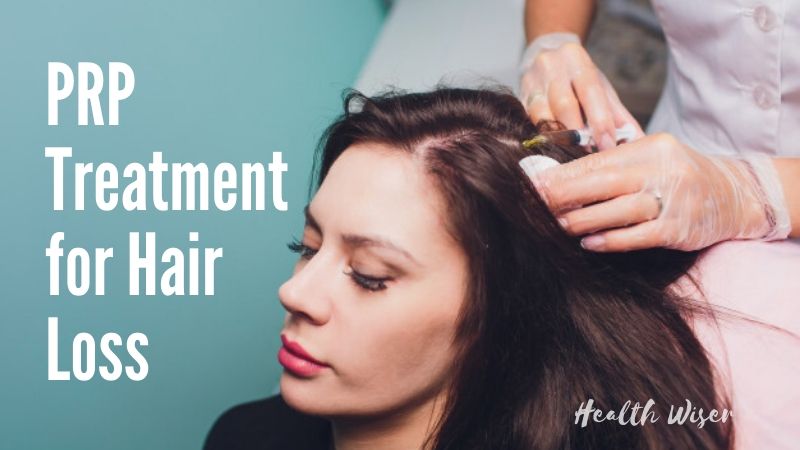
PRP treatment is a non-surgical method of hair loss treatment and hair restoration for men and women. Research has found PRP injections to be effective in improving male pattern baldness, also known as androgenic alopecia. PRP treatment is gaining a lot of popularity in India. But should you undergo it?
In this piece we will discuss the things to consider before going for PRP treatment for hair in India.
Let's find out.
What is PRP treatment?
PRP stands for platelet-rich plasma. The treatment involves drawing your blood, extracting the platelet-rich part of it, and injecting it into the areas of the scalp that are losing hair.
Platelet-rich plasma is rich in proteins and growth factors. It is part of your body's own repair system; it is what helps heal your skin when it gets damaged.
So, the idea is that when your own growth factors are concentrated and injected into your scalp, they can stimulate the hair follicles to grow again.
PRP has been around for a long time, since the 1980s, but it has become quite popular recently. In the mid-2000s, doctors found that injecting PRP into areas with chronic problems such as tennis elbow (epicondylitis) could help them heal. Since then, medical professionals have tried it in many different conditions. One of the areas where PRP has shown good results is the treatment of hair loss.
How does PRP work?
Platelet-rich plasma contains several growth factors and proteins that are important for tissue healing. It is thought that PRP therapy could help regrow hair by reversing part of the process that happens in androgenetic alopecia.
PRP is concentrated blood plasma which contains approximately 5 times the number of platelets found in normal circulating blood.
In particular, the growth factors in PRP that are thought to support hair growth include:
- Epidermal growth factor (EGF): cell growth, collagen and blood vessel formation
- Vascular endothelial growth factor (VEGF): blood vessel formation
- Platelet-derived growth factor (PDGF): blood vessel, cell and skin formation
- Transforming growth factor beta (TGF-β): the growth matrix between cells, bone metabolism
- Fibroblast growth factor 2 (FGF-2): blood vessel and specialised cell growth
- Insulin-like growth factor 1 (IGF-1): also known as somatomedin C, a protein that regulates normal growth in nearly every type of cell in the body
The PRP therapy process
PRP treatment is a 3-step process. Most patients need 3 treatments spaced 4 to 6 weeks apart, with maintenance injections every few months (often every 6 months).
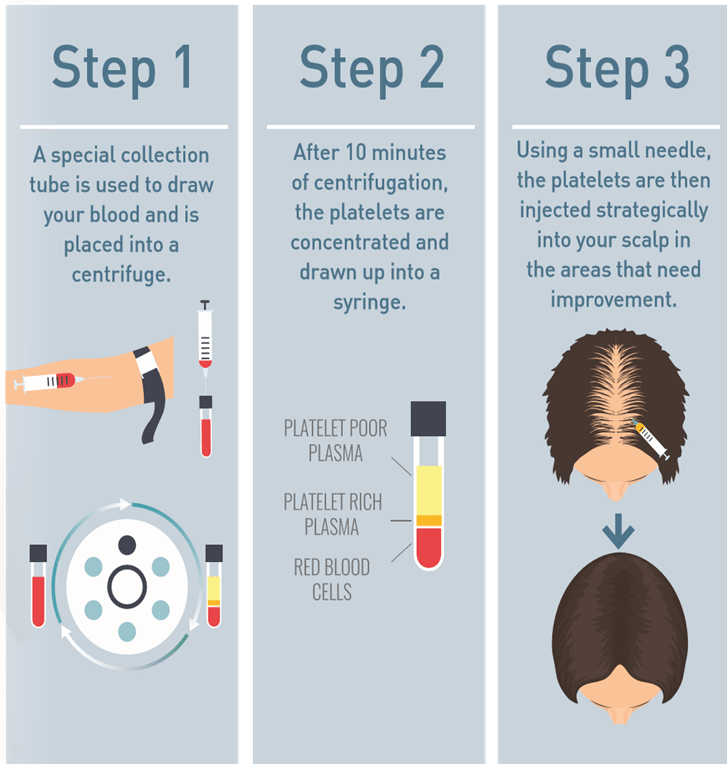
Step 1
Your blood is taken from your arm and put into a centrifuge, a machine that spins the blood rapidly to separate it into its different components. The amount of blood drawn depends on the area to be treated.
Step 2
After spinning for about 10 minutes in the centrifuge, your blood separates into 3 layers:
- Platelet-poor plasma
- Platelet-rich plasma
- Red blood cells
Step 3
The platelet-rich plasma is drawn into a syringe and injected into the problem area, for example the areas of the scalp that need more hair growth.
For hair loss, the injections are given over a few minutes, and there are often a dozen or more of them.
Please be warned that this procedure can be painful. More about that below.
Benefits of PRP
Platelets are the cells in your blood that help tissues heal. When PRP is injected into the scalp, it is thought to promote collagen growth and tissue repair, and to stimulate inactive hair follicles.
The benefits of PRP for hair treatment include:
- Increased blood supply to the follicles
- Triggers the body's regenerative process
- Promotes natural hair growth
- Thickens the hair shafts
- Makes hair stronger, so hair fall reduces
- The treatment is non-surgical, with only small injections
- Serious side effects are rare
What are the side effects of PRP?
Because PRP uses your own blood platelets, the risk of an allergic reaction or of catching a blood-borne disease is very low, as long as the clinic uses sterile, single-use equipment.
However, there are some mild effects you might experience, which are caused by the injections themselves.
Some common side effects of PRP are:
- scalp tenderness
- mild pain or irritation
- some swelling
- itching
- a little bleeding at the injection sites
- headache
You should also watch out for any sign of infection: increasing redness, heat, a spreading rash or fever. If you notice any of these, talk to your doctor straight away. Overall, the risks are quite limited compared to many other treatments, but you should discuss the potential risks with your doctor before undergoing the procedure. PRP may not be suitable if you have a blood or platelet disorder, an active infection or cancer, or take blood thinners.
Your doctor may advise you not to wash your hair for about a day after the treatment. Other than that, most people can resume their daily activities almost immediately.
PRP treatment in India
Hair loss is a major concern among both men and women in India, and so is the demand for better hair restoration techniques.
PRP for hair started to catch on in India around 2012–2013, and by 2020 it had become one of the most popular hair restoration treatments in the country. It uses your body's own healing and growth factors, concentrating them and applying them to weakened hair follicles to stimulate growth, and it rarely causes serious side effects. That appeals to many people.
Many medical clinics in India offer PRP, and many patients are happy with the results. Find PRP treatment centres and doctors in Bangalore and Mumbai.
How much does PRP for hair cost in India?
Typically, PRP for hair growth needs 3–4 sittings at an interval of about 1 month.
As of 2020–21, 3 sessions of PRP for hair, along with a few maintenance sessions, cost anywhere between Rs. 20,000 and Rs. 80,000 in India. A single session cost about Rs. 10,000 to Rs. 25,000. Prices have likely changed since, so ask clinics for a current quote.
The price of PRP treatment depends mostly on:
- the severity of your condition and the size of the area to be treated
- the experience of the dermatologist treating you
- the equipment and kit used to prepare the platelet-rich plasma
- where you are located; the price can vary a lot between cities
Best places for PRP hair treatment in India
There are reputable clinics in all major Indian cities. Use our city guides to find clinics and doctors for PRP treatment for hair loss:
Is PRP effective?
In 2019, a group of researchers carried out a systematic review of the research, published in the journal Aesthetic Plastic Surgery. They looked at 11 research papers with a total of 262 participants who had androgenetic alopecia. The review found that PRP therapy reduced hair loss and increased both the diameter of the hairs and hair density.
But larger studies with standard protocols are still needed to confirm how effective PRP really is. Many doctors and patients do report good results, and many people see a difference within a few months.
How the PRP is prepared makes a big difference to its effectiveness; it gives the best results only when it is prepared properly. Check that the clinic screens for blood-borne infections (viral markers) before injecting PRP.
Knowing the platelet count of the PRP being injected is also important. Many clinics can check the platelet count in their lab, and if you are paying for an expensive treatment you should ask them to. In our research, PRP treatment worked best when the platelet concentration was about 1–1.5 million per microlitre.
Also, you must know that this treatment can only make thinning hair thicker by strengthening the hair follicles. It cannot grow hair on a completely bald spot.
Is PRP painful?
The PRP injections can be quite painful because your scalp is very sensitive, with a lot of blood vessels and nerves. Many clinics apply numbing cream or use a local anaesthetic first. Afterwards there is usually not much pain, though you might have a mild headache.
How long does PRP last?
There is no good evidence yet on exactly how long the effect of PRP treatment lasts. The effect is not permanent: as the follicles keep getting weaker with age and with androgenetic alopecia, the benefit fades, which is why maintenance sessions are recommended. A repeat course of PRP may help keep your hair for longer.
Take away
Before you decide to go for the treatment, you should have realistic expectations.
As PRP injections are intended to promote healing or growth, you may not notice any immediate difference. But over several weeks or months, you may notice hair growth that you wouldn't have had without the treatment.
Also, it can only thicken your hair by strengthening the follicles and reactivating follicles that very recently stopped growing hair. It can't grow new hair on completely bald areas. So this treatment gives good results for people who are experiencing hair loss, not so much for people who have already lost all their hair.
It works best when you are young and still have at least 60–70% of your hair. It can also be used for maintenance before and after a hair transplant, or as part of a hair fall treatment plan.
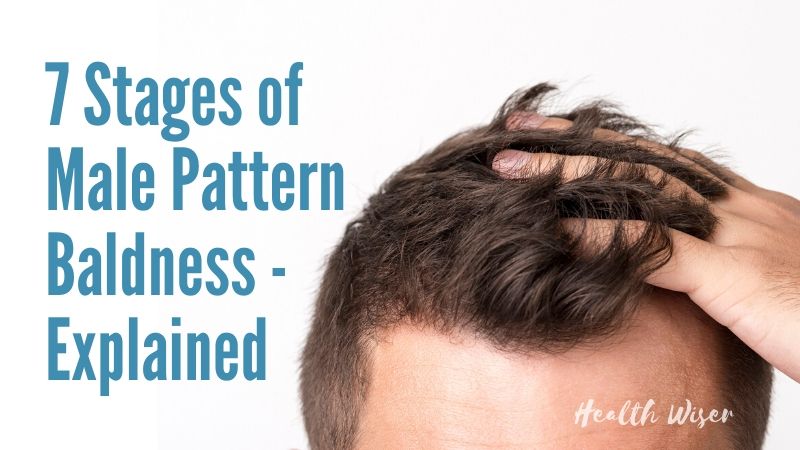
But as you can see, it is quite expensive. If you are in the early stages, ask a dermatologist about starting with proven treatments like topical minoxidil, or tablets like finasteride (for men), before PRP. Not sure how far your hair loss has progressed? See the 7 stages of male pattern baldness.
Sources
- Anitua E, Pino A, Martinez N, Orive G, Berridi D. The effect of plasma rich in growth factors on pattern hair loss: a pilot study. Dermatologic Surgery. 2017;43(5):658–670. PubMed 28221183
- Mao G, Zhang G, Fan W. Platelet-rich plasma for treating androgenic alopecia: a systematic review. Aesthetic Plastic Surgery. 2019;43:1326–1336. doi:10.1007/s00266-019-01391-9
- Khatu SS, et al. Platelet-rich plasma in androgenic alopecia: myth or an effective tool. Journal of Cutaneous and Aesthetic Surgery. 2014. doi:10.4103/0974-2077.138352
- NHS. Hair loss.