10 Frequently Asked Questions about Laparoscopic Surgeries
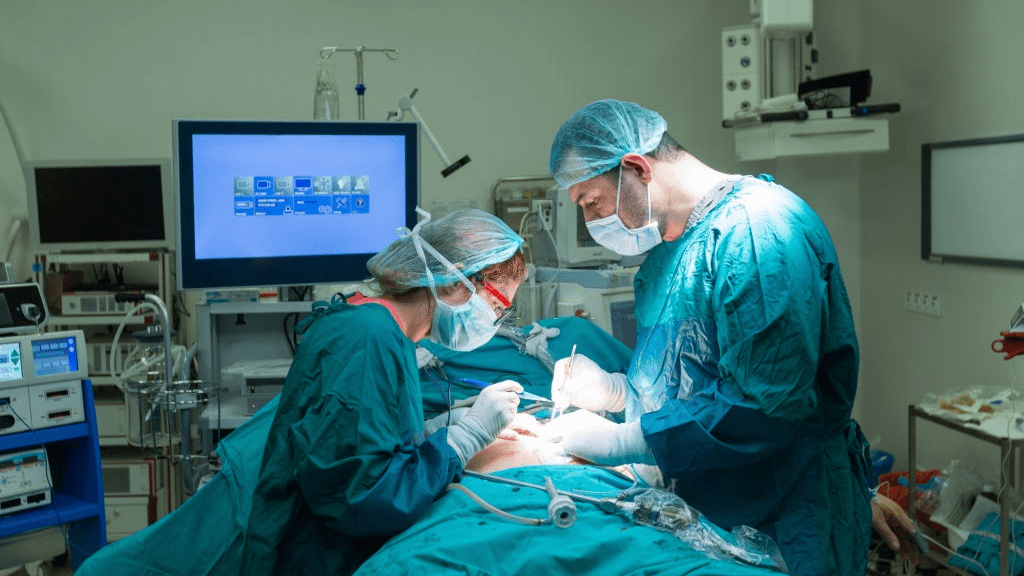
Laparoscopy or diagnostic laparoscopy is a specialised surgical procedure for viewing the organs inside the abdomen.
Laparoscopy uses a small camera to see the organs inside the patient's abdomen. A laparoscope is an instrument that has a long, thin tube with a high-resolution camera at the front. A small incision is made on the abdomen wall and this instrument is inserted through it. The images from the camera are sent to a video monitor.
Laparoscopy allows the surgeon to see inside the abdomen in real time, without open surgery. It just requires a tiny hole instead. The surgeon can even collect biopsy samples during the procedure.
So, it's a minimally invasive procedure that hurts less, recovery is faster and it has a better success rate.
So here are the top 10 questions people have about laparoscopic surgeries
1. Why is laparoscopic surgery done?
Laparoscopy helps surgeons to diagnose and even treat some of the problems in the abdominal organs without performing open surgery. It can help identify the cause of bleeding or the source of pelvic or abdominal pain, and it can find the reason for trouble related to pregnancy.
Here are some scenarios when diagnostic laparoscopy is performed: abdominal pain, an abdominal mass, ascites, liver disease, and even a "second look" procedure or cancer staging.
In many cases, abdominal problems can also be diagnosed with imaging techniques such as ultrasound, a CT scan or an MRI scan.
Diagnostic laparoscopy is performed when these tests don't provide enough information or insight for a diagnosis.
2. How many types of laparoscopy are there? Or, what surgeries can be done laparoscopically?
There are a number of different types of operations that can be performed laparoscopically. Some of those are laparoscopic cholecystectomy (removal of the gallbladder), laparoscopic hernia repair, laparoscopic splenectomy (removal of the spleen), laparoscopic hepatectomy (removal of part of the liver) and laparoscopic pancreatectomy (removal of part of the pancreas).
3. How is laparoscopic surgery done?
During laparoscopic surgery, the surgeon makes a small incision of around 0.4 to 0.6 inches (1–1.5cm), usually around your belly button.
A tube is inserted in your abdomen through the incision, and carbon dioxide gas is pumped in to inflate your abdomen. This allows the surgeon to see your abdominal organs clearly and makes more room to work. Then the laparoscope is inserted through the tube. The laparoscope sends images of the inside of your tummy, which are viewed on a screen in real time.
If the laparoscopy is done to perform a surgical treatment, some more incisions are made to insert small surgical instruments. The surgeon guides these instruments using the view from the laparoscope on the screen.
After the procedure, the carbon dioxide gas is removed, the incisions are stitched or clipped and a dressing is applied.
4. How long does a laparoscopic surgery take?
When the laparoscopy is performed to diagnose a condition, the procedure generally takes about 30–60 minutes. But it takes much longer if laparoscopy is done to treat a condition, depending on the type of surgery being performed.
5. Is laparoscopic surgery painful?
You may feel a little pain and discomfort for a few days following the procedure, but it will improve fast. Your doctor may prescribe some medication to relieve the pain. It's expected to have shoulder pain after the procedure (this is caused by the gas used to inflate your abdomen). Overall the pain is a lot less and recovery is very fast compared to open surgery.
6. Is laparoscopic surgery safe?
Laparoscopy is a quite commonly performed procedure and serious complications are rare.
But any abdominal surgery is associated with certain risks. Complications related to anaesthesia, bleeding or infection are among the common risks, and laparoscopy is not completely free from those.
As laparoscopy requires very small incisions, they heal faster with a lot fewer chances of infection. In many cases, laparoscopic surgery is even safer than traditional open surgery.
7. Which is better, laparoscopy or open surgery?
Compared to traditional open surgery, patients who have laparoscopic surgery often experience less pain, a shorter recovery time, same-day release from the hospital and less scarring. Your surgeon will advise which approach suits your condition, as not every operation can be done laparoscopically.
8. How long does it take to recover from laparoscopic surgery?
The time it takes to recover from a laparoscopy is different from person to person. It depends on many things, like the purpose of the procedure.
If the laparoscopy is done only for diagnostic purposes, one can resume regular activities within 5 days. But if it is done for a small surgery like appendix removal, it may take about 3 weeks. If the procedure is performed to remove your ovaries or kidney to treat cancer, it may take longer: 10 to 12 weeks.
Usually, the recovery time after laparoscopic surgery is a lot less than after traditional open surgery, because of the small incisions. But the reason for the surgery matters a lot. Recovering from a kidney removal takes a long time whichever way it is done; the surgical approach can only influence the recovery time so much.
9. When can I drive after laparoscopy?
You are advised not to drive a car for 48 hours after your laparoscopy, because the anaesthesia used for the procedure causes drowsiness. After that, you may be able to drive, but it also depends on why the procedure was performed. If you had major surgery, it may take much longer to recover enough to drive safely, so check with your surgeon.
10. When will I need to see my doctor again?
You will need to see your doctor about 2–6 weeks after the procedure. The surgeon will make sure you are healing well and not facing any complications. If you notice anything unusual, such as fever, increasing pain, redness or discharge from a wound, or difficulty passing urine, don't hesitate to call your doctor.
So here is our list of the 10 most popular questions about laparoscopic surgeries, answered.
Having hernia surgery? Read our guides on whether hernia repair mesh is safe and what to do and avoid after inguinal hernia surgery.
Sources
- NHS. Laparoscopy (keyhole surgery) (uses, procedure, recovery times).