Is the Prosthetic Mesh Used for Hernia Repair Safe?
Hernia is a very common health issue. The condition occurs when an organ or tissue pushes through a weakened or opened spot in a muscle or connective tissue in the abdominal region. The hernia causes a bulge in the groin, a sharp burning sensation and discomfort as the organ protrudes through the muscle wall.
The presence of an opening or a weak spot can commonly occur in patients and does not necessarily need immediate medical attention. Over time, the organs begin to actively push through the weakening, calling for medical intervention. In severe cases of hernia, the intestine can get trapped in the hernia. Such cases need immediate surgery.
Get urgent medical help if a hernia becomes suddenly very painful, hard or can't be pushed back in, or if you also have vomiting, can't pass stools or wind, or feel very unwell. These can be signs of a trapped (strangulated) hernia, which is an emergency. In India, call 108 or 112.
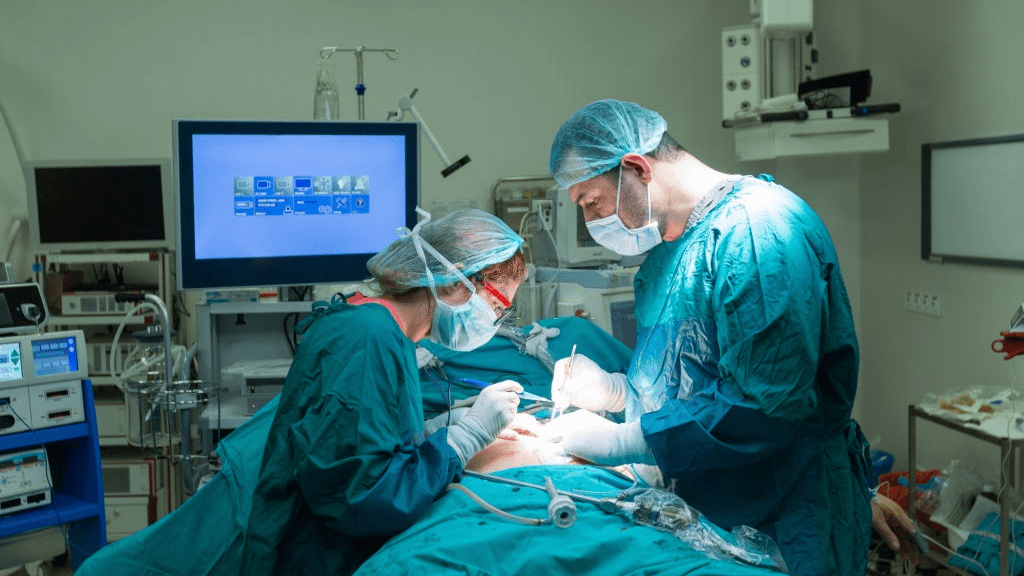
Hernias are of different types, and so are their surgical procedures and the treatment methods that have developed in recent times. The use of prosthetic mesh for hernia repair is one of them. These prosthetic meshes have been used for over 50 years in the medical field, and mesh repair is widely considered the most reliable approach for many types of hernia.
However, with the advent of modern medicine, the safety of prosthetic meshes has been questioned and rethought.
Is prosthetic mesh safe?
Although the prosthetic mesh has been a gold standard for hernia repair, it is found to be associated with certain complications.
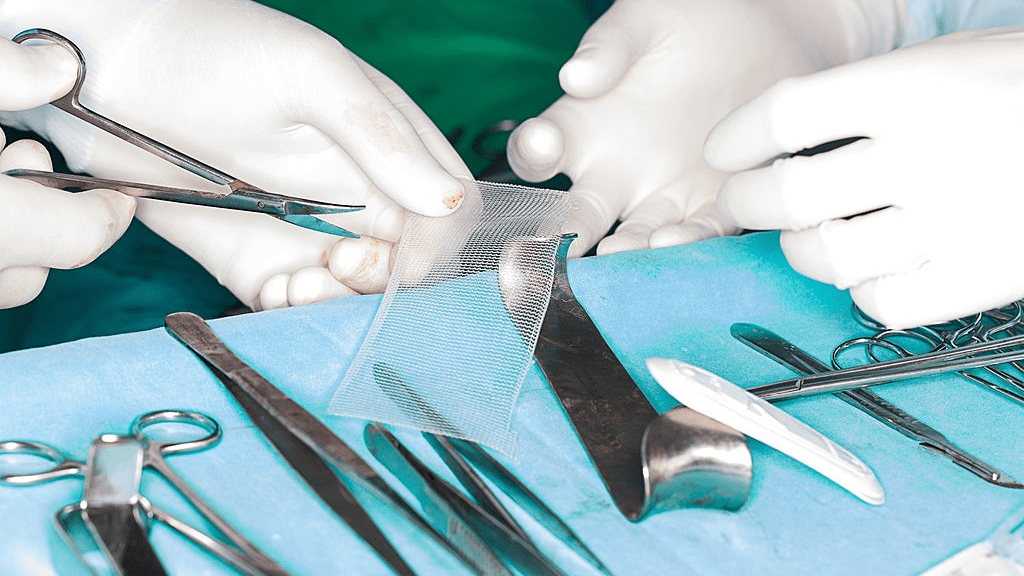
Mesh used for repair is a sterile, woven material made from a synthetic plastic-like material, such as polypropylene. Though sterile, it is still a foreign material that is introduced into the body. So there is a possibility of infection if the mesh is exposed to contamination. There are also chances of the mesh causing obstruction of the bowel and scarring of adjacent tissues. There are instances of the formation of adhesions. However, adhesions occur in all patients who have undergone surgery in the abdomen, hence mesh cannot be regarded as the sole cause of adhesions.
Regardless, as medical practitioners know, the pros and cons of any surgical procedure have to be weighed carefully for each patient.
Benefits of using prosthetic mesh
Before prosthetic mesh was used, hernia repair was done by performing a simple suture and closing the hernia. But for certain kinds of hernia, the success rate of this approach was low, with the hernia recurring at a later stage.
The use of mesh revolutionised hernia repair. The major benefit of mesh is lowering the chance of the hernia coming back (recurrence). The prosthetic mesh is plugged or patched into the weakened area to strengthen the opening.
Complications of using prosthetic mesh
Most reliable scientific literature and peer-reviewed articles suggest that the major complications of surgical hernia repair, with or without mesh, are burning pain, infection, tissue scarring, adhesions of tissues, vessels or organs, obstruction of the large or small intestine, a bulge at the area of surgery due to fluid build-up (seroma), and perforation of adjacent tissues or organs.
Apart from the above adverse events after a surgical hernia repair, the complications that are specific to repair using a prosthetic mesh are displacement of the mesh (mesh migration) and shrinking of the mesh (mesh contraction).
Many of the hernia repair complications reported to the US FDA have been linked to recalled mesh products and not to the approach itself. These recalled mesh products are no longer used in surgery. Some of the common complications reported include infection, obstruction, severe pain and recurrence, and the main cause of the bowel perforations and obstructions reported was the recalled mesh products.
Can a hernia be treated without a prosthetic mesh?
The use of a prosthetic mesh depends on the type of hernia that needs to be repaired. While mesh is not always necessary, it is often recommended. Groin hernias have been treated successfully without mesh. Mild cases of hernia near the navel have been treated by simply suturing the hernia laparoscopically, with a promising success rate.
Talk to your surgeon about which repair is right for you, what type of mesh (if any) they plan to use, and their own results with it.
Read next: Do's and don'ts after inguinal hernia surgery and 10 FAQs about laparoscopic surgery.
Sources
- NHS. Hernia (symptoms and when to get urgent help).
- NHS. Inguinal hernia repair (open and laparoscopic repair, use of mesh).